Discovering your Gameplan pt1: Neutral

What is a gameplan? A gameplan is the understanding of why your character`s tools exist, how and when to use them, the philosophy behind the design of your character, and optimizing your play to be in the situation where your character strives the most. The gameplan of your character is split up into phases, breaking it down into more palatable chunks. For example, a neutral gameplan (used during neutral), an offensive gameplan (used when your character is running offense), and a defensive gameplan (used when your opponent is running their offense). These are not different gameplans, but chunks of the same overarching gameplan for your character.
About the Neutral Gameplan
Neutral tends to be the most freeform side of fighting games. Because of this, it's harder to turn your thoughts of a Neutral Gameplan into language that can be written on paper and read to someone else. For my first couple years of playing fighting games, I was mostly unaware of my own thought process in neutral, despite using it so often. The reason why you want to be able to understand your Neutral gameplan is because it's easier to make improvements to something you're conscious of, and easier to execute the better you understand what and why you're doing.
A neutral gameplan is an understanding of what all your tools in neutral do, how you respond to the tools of your opponent, and how you cycle your options to interact with your opponent strategically. Ideally, your neutral gameplan will grow overtime with the more you learn, and you will execute your neutral gameplan with Intention. Knowing the capabilities of your character and what tools your character has in neutral is essential to forming your neutral gameplan. Here are some common tools you will see in neutral, what they are used for, and what effect they have on who you're playing against.
Pokes

Pokes are moves that have a good balance between range and speed, tend to be the longest or one of the longest moves your character has, and are the kinds of moves you will likely use in neutral the most. They tend to be low risk buttons that are safe or cancelable on block, and ideally lead to a combo and offense on hit (combo conversion is not a given). Pokes are used to stuff approaches for your opponent, hit your opponent after closing distance between you and them, used to get your opponent to back away/jump/or other risky actions, or used to whiff punish/counterpoke an incoming poke from your opponent.
Pokes are often used to get opponents to do things far riskier than walking left and right. When putting the wall of a poke between you and your opponent they have to resort to more drastic means to hit you. This most commonly comes in the form of jumping over your poke. By threatening your poke, and by keeping track of how and when your opponent responds to your poke, you can score yourself rewarding Anti Air.
Another counter to poking is for them to try and whiff punish your poke. They will walk within the range to warrant throwing out your poke, they will walk backwards out of this range, and then your poke hits nothing (whiffs), and you're open to being hit by your opponent. If your opponent likes to whiff punish you, you can either walk them back into the corner, catch them walking backwards with a sweep, or you can take space. The solution depends on your game, character, and other context from the match. You can't watch the ground and the air at the same time, so keep track of your opponent's response after they get poked. If they like to try jumping after getting poked, then start watching the air after landing a poke on them, and be ready to Anti Air.
Anti Airs

Anti Air are the tools your character uses to combat other characters jumping. Anti Airs punish people for trying to jump over your pokes and fireballs. Because Anti Airs punish jumping, they deter jumping too. If someone notices you watching the air, they will approach grounded instead, so make sure you keep track of your opponent's response to getting anti aired and plan accordingly.
Fireballs

Fireballs are similar to pokes, but have big differences that set them apart. Fireballs are active for a long time, and put a wall between you and your opponent for a long duration. Fireballs also cover a range farther than your pokes (fireballs come in all shapes or sizes so this isn't necessarily true). Fireballs are a relatively safe way to threaten your opponent from beyond the range of your pokes, are amazing for controlling space, and if your fireball is on the slower side you can walk behind it to take space.
Fireballs do suffer from one fatal flaw, they cover great space horizontally, but often only horizontally. They also tend to have lots of recovery frames (after the fireball comes out, you're stuck in the animation for a while), and these two factors combined makes them extremely susceptible to being jumped over. That being said, if someone doesn't plan in advance and tries to jump over the fireball on reaction to it being thrown, be ready to have an anti air ready as you can typically recover fast enough to hit them out of their jumping. Another weakness is more common if you play anime fighters (albeit still rare); someone can hit you during your recovery frames with a disjoint that goes through the fireball. Just like the pokes, keep track of what your opponent does after you present your fireball. Keep track if they jump in response to your fireball and be ready to watch the air instead of watching the ground and throwing your fireball.
Air stalls

Air stalls are a little more abstract than the other kinds of moves I mentioned, and some of the more cooler ones too. They aren't nearly as common but I thought they deserved their own section.
When you use an AntiAir, you don't press the Anti Air when someone is within its range, because if you do that they will already be too close by the time the Anti Air is out. It's similar to how you have to lead your shots in a shooter, or in sports when you aim for where your teammate is going to when passing to them, rather than where they are in that movement. Air stalls take advantage of this by halting your momentum, causing you to be in a different spot than the person who threw the antiair predicted you were going to be.
A common form this comes in is a divekick. Not all divekicks are airstalls like this, but many alter your momentum in the air to cause anti airs to whiff. This is essentially whiff punishing an anti air. Air stalls that can be used to punish antiairs aren't the most common tools but they are a big game changer to have for your neutral gameplan, and their scarcity adds to their strength by messing with the patterns of seeing a jump and anti airing that your opponent could be used to. Divekicks tend to be minus on block when used at the ranges to beat anti airs, and could even be unsafe on block. But since air stalls are more rare and character specific, you tend to have to know how to counter a specific character’s air stall to deal with it.
Neutral Skip
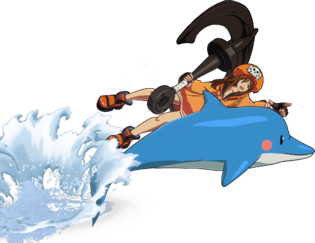
The name is pretty misleading, but Neutral Skips are indeed part of neutral. Neutral skips are fast, large, forward advancing moves that typically start far away and end with you and your opponent being at close range. Neutral skips (despite what people say) tend to be high risk options, but lead to an advantageous situation if they land. Since they are normals that advance a large distance, the characters' hurtbox tend to fly forward with them, which leaves them vulnerable to running straight into a hitbox. Neutral skips also tend to cover the screen very horizontally, and can be jumped over and punished. It's not uncommon for neutral skips to be minus on block, so if your neutral skip is blocked you can lose your turn, and if it's minus enough you can get punished for it.
That being said, a large, fast advancing normal is a great tool to have to keep your opponents on their toes, especially if your opponent is hoping to interact with you at far to mid ranges.
”Your opponent will have to try to intercept or avoid your move, or if that's not an option, go complain on Twitter about how thoughtless your character is.” The Fighting Game Glossary by Infilament
Check / Jab check / Light check

Close range attacks can be very useful in neutral too. Some tactics in neutral, like some neutral skips, can be stuffed out with a jab/light attack. If your opponent threatens you in a way where they go from neutral to sliding into your jab range before the active frames of what they pressed, you can hit them out of whatever they are doing with a jab before their move is active. It doesn't necessarily have to be against a neutral skip, but if someone is trying to dash deep into you for whatever reason they could be vulnerable to getting checked, but your larger buttons might not be fast enough to check them in time. The most notable example of this is jab checking drive rush in sf6.
Backdash

Backdashes are used in neutral whenever you're in an awkward / disadvantageous position, and you want to move to a position that's more advantageous behind you. But be careful, because if your opponent anticipates your backdash it can typically lead to a large reward for them.
Knowing where to stand
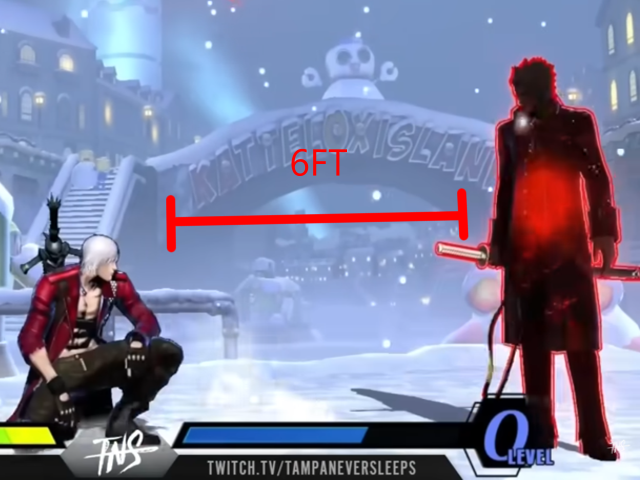
Sometimes you want social distsancing
One of the most important parts of your neutral gameplan is knowing where your character likes to stand. A common misconception is that your character likes to stand in a specific spot, but your character could have more than one distance in neutral they are comfortable being in.
The character you're playing isn't the only factor you need to think of, but also what tools your opponent has available to them as well. And this could change in the moment. For example, you may want to play closer or farther based on health, resources, and time. Some characters don't have specific ranges they would like to be at, but want to be as far away as possible. Despite all these factors, there are some rules of thumb you can follow to help develop your gameplan
You tend to want to be out of the range of your opponents' normals. If you're outside of this range, your opponent will have to move towards you in order to hit you, which takes longer as it is a bigger risk. You also want to be in range for your attacks to be threatening. The sweet spot for this tends to be a little bit outside of common pokes your opponents character uses. The ideal closest range your character will be comfortable in in neutral is one where you have enough distance to not immediately be threatened by your opponents normals, will be able to whiffpunish attempts at your opponent keeping you away, but still close enough to be able to get in range and hit your opponent quickly.
A quick way to solve for this range is think about your character's best poke in, and then think about your opponent's best poke. Whichever is bigger, stand a little bit beyond the range of that button.
That could be one distance your character is comfortable at, but what are some others? Characters with fireballs can be comfortable at most distances from their opponent depending on their opponents tools. And you can feel comfortable beyond all the tools of your opponent, but you might not be threatening at that distance either.
Knowing what to do

Your neutral gameplan is a web of responses to different situations presented by your opponent in neutral. The point of your neutral gameplan is to already have responses to these situations figured out, and once you're in the game you have to realize the situation you're being put in, and execute your response. Here are some examples for parts of your neutral gameplan.
My opponent has been jumping at me,
I should watch the air more instead of the ground, and press [your character`s AntiAir] to Anti Air them
My opponent had been walking towards me and poking me,
I should stuff their approach with a fireball or poke
My opponent is just staying outside of the my range and blocking everything,
I should walk them into the corner
My opponent always throws fireballs at this range in neutral,
I should jump over them preemptively
When I walk towards my opponent, they throw out a button to stop my approach,
I can move in and out of that range to whiffpunish my opponent.
They can be a lot more character specific too.
Every time this yuzuriha runs out of stance markers, they throw out a B slash,
So I can jump over this B slash and take my turn
This anji player has been spinning towards me whenever im at f.S range in neutral,
I should opt to not his a button at this range, and throw him after I see him spinning
Ideally, you will have an answer for all your opponents tools in neutral and know the options your character has in the face of them, but Rome wasn't built in a day, and I don't think most people, including me, have all these answers. Your neutral gameplan is something that grows over time. The best way to expand your neutral gameplan is to play a lot (obviously), review your gameplay (especially the losses), and to watch footage of other people playing your character, as picking up on what they know could save you the hassle of figuring it out yourself. If you do look to other players for inspiration, make sure the pool of players you watch are numerous, as different players have their own strengths and weaknesses.
Cycling Options
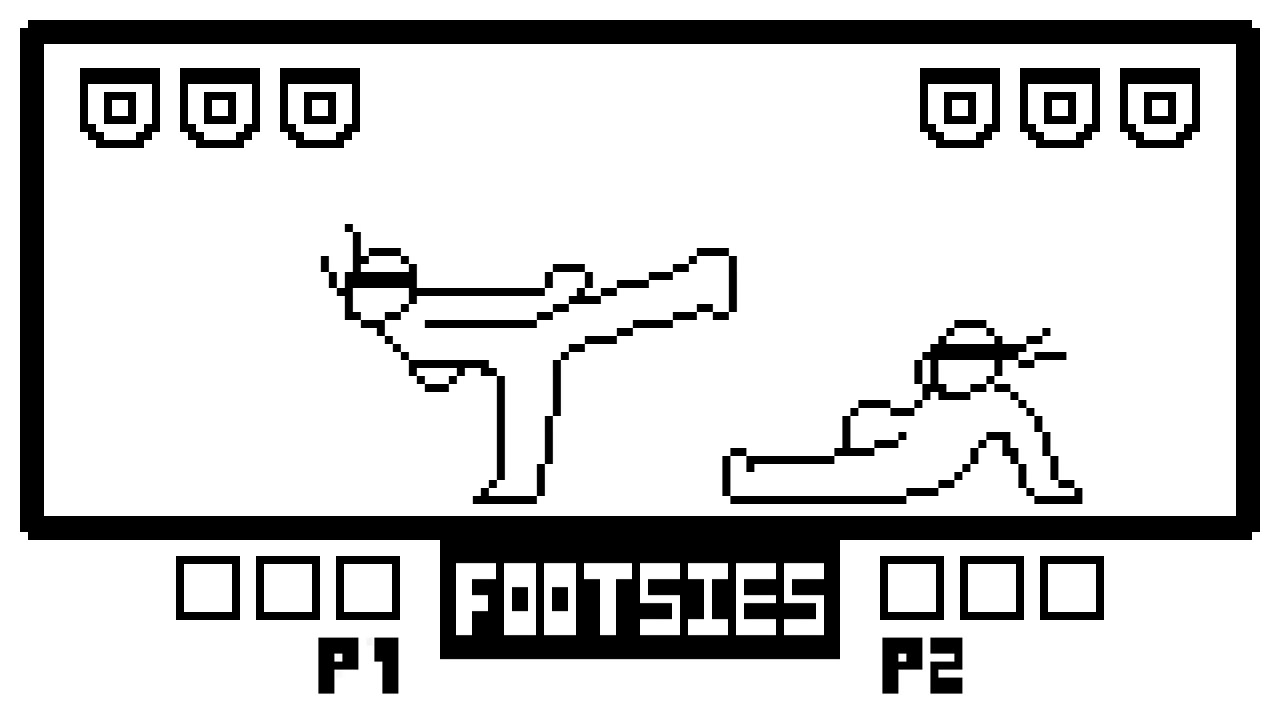
We want to keep track of how our opponent responds to our tools in neutral. Here are some common examples.
Situation:
After getting anti aired, my opponent approached on the ground and took their turn since I was watching the air,
Immediate response:
I should watch the ground and ready a poke
Future Response:
If I land an anti air in the future, I should watch the ground rather than waiting a consecutive jump in
Situation:
After my opponent walked into my poke, they whiff punished it the next time we were in neutral.
Immediate response:
I should try to sweep or push them into the corner for now,
Future response:
If I land a poke in the future, I'll go for a sweep or push him into the corner next rather than throwing a poke a second time in a row.
Situation:
I walked toward my opponent and poked them, but when I tried it again they stopped me with a poke of their own
Immediate response:
I should try to whiff punish this poke
Future response:
If I walk toward my opponent and poke them, the next time we're in neutral I'll go for whiff punishing their poke next.
Based off of these interactions we can get a base idea of how our opponent likes to cycle their options:
When something doesn't work out for our opponent, they cycle to counter whatever we did. Knowing these tendencies is useful for future interactions, for example:
We caught our opponent walking towards us by throwing out a fireball, but based on how he reacted to other situations, I know they are looking to jump over it if I try that again. Next time I want to throw the fireball, instead I'll watch the air and wait for them to jump at me. Cycling options has a lot of depth itself, and I'll make a guide on it eventually.
It's hard to form your neutral gameplan, it will start small and simple, but will grow bigger overtime the more you work on it and learn about your character and the game you're playing. If you thought this was a good guide or you have questions, please send me an email strawberrykiwiclub@gmail.com. Thanks for reading, it means a lot.
